



Picture this: Your sales team just closed a major deal in Bengaluru, your HR head is interviewing candidates across three cities, and your finance manager is frantically trying to reconcile 47 different travel receipts. Sound familiar?
If you’re leading a growing business in India, you’ve probably noticed that corporate travel isn’t just about booking flights anymore. It’s become a strategic function that can either fuel your growth or drain your resources. The companies winning today aren’t just managing travel; they’re reimagining it entirely.
Let’s explore how the corporate travel landscape is transforming for Indian businesses and what you need to know to stay ahead.
Why Corporate Travel Management Matters More Than Ever
Gone are the days when corporate travel meant handing employees a company credit card and hoping for the best. Modern Indian businesses are dealing with a completely different playing field.
The numbers tell the story. Indian corporate travel spending is projected to reach $47 billion by 2024, making it one of the fastest-growing markets globally. But here’s what most business leaders miss: it’s not about how much you spend, it’s about how intelligently you manage those expenses.
Growing businesses face unique pressures. You’re expanding into new markets, hiring rapidly, and competing with larger enterprises. Every rupee counts, yet you can’t afford to skimp on the travel experiences that drive client relationships and employee satisfaction.
The companies thriving today have figured out that strategic travel management delivers three critical advantages:
- Cost control without compromising quality: Smart businesses reduce travel expenses by 20-30% through better policies and technology
- Enhanced employee experience: When travel is seamless, your team focuses on what matters rather than logistics
- Data-driven decision making: Understanding travel patterns helps optimize budgets and identify growth opportunities
The Shift from Traditional Travel Desks to Integrated Solutions
Remember when managing corporate travel meant calling a travel agent and waiting 48 hours for a booking confirmation? That world is disappearing fast.
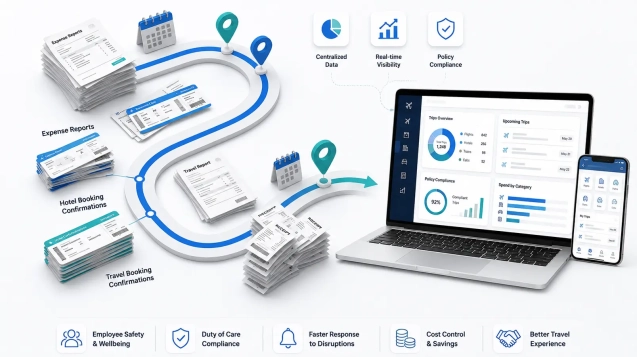
Traditional travel management was built for a different era. You’d book through an agency, pay their fees, collect paper receipts, and manually enter everything into spreadsheets. The process was slow, expensive, and gave you zero real-time visibility into spending.
The new model looks completely different. Modern corporate travel platforms integrate booking, approvals, expense management, and reporting into one seamless system. Your employee books a flight on their phone, gets instant approval based on your policy, and the expense is automatically recorded.
This isn’t just about convenience. Integrated solutions give you something invaluable: control and visibility. You can see exactly where money is going, identify patterns, negotiate better rates with preferred vendors, and make informed decisions about travel budgets.
For growing Indian businesses, this shift solves a critical pain point. You’re no longer choosing between the personalized service of traditional agencies and the efficiency of technology. You get both.
What Modern Corporate Travel Technology Actually Does
Let’s get specific about what makes today’s travel management platforms game-changing for businesses like yours.

Automated Policy Compliance
Your travel policy shouldn’t require a PhD to understand. Modern platforms embed your rules directly into the booking process. If your policy says economy class for flights under three hours, the system won’t even show business class options. No more awkward conversations about policy violations.
The best part? You can customize policies by department, seniority level, or trip purpose. Your C-suite might have different allowances than junior staff, and the system handles it automatically.
Real-Time Expense Tracking and Reporting
Finance teams love this feature because it eliminates the month-end scramble. Every booking is captured instantly, categorized correctly, and ready for reporting. You can pull up spending data by department, project, city, or any dimension you need.
This real-time visibility helps you spot trends early. Notice that Mumbai trips are costing 40% more than expected? You can investigate and course-correct immediately instead of discovering it during quarterly reviews.
GST Compliance Made Simple
Here’s something international platforms often miss: India’s GST requirements for business travel. The right solution automatically captures GST details, generates compliant invoices, and organizes everything for your Input Tax Credit claims.
For growing businesses, this alone can save thousands of rupees monthly and countless hours of manual work.
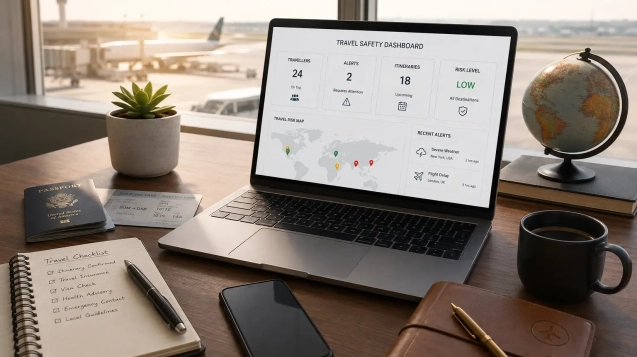
Duty of Care Features
When your team travels, you’re responsible for their safety. Modern platforms include features like:
- Real-time travel alerts for weather, strikes, or security issues
- 24/7 support for travel emergencies
- Trip tracking so you know where your employees are
- Quick rebooking options when plans change
These features aren’t luxuries anymore. They’re essential for businesses that want to attract and retain top talent.
The ROI Question: Does Investing in Travel Management Actually Pay Off?
Every growing business asks this question. You’re already stretched thin with investments in product, sales, and operations. Why prioritize travel management?
Here’s the honest answer: the payback happens faster than you think, but only if you measure the right things.
Direct cost savings are the obvious benefit. Businesses typically see 15-25% reduction in travel expenses within the first year. This comes from negotiated rates, policy compliance, eliminated booking fees, and reduced fraudulent expenses.
But the indirect returns matter just as much:
Time savings for your team: Your employees aren’t travel agents. Every hour they spend wrestling with bookings and expense reports is an hour not spent on revenue-generating activities. Modern platforms reduce booking time from 30 minutes to 5 minutes.
Better financial planning: When you can accurately forecast travel spending, you make smarter budget decisions. No more surprise overruns that throw off your quarterly numbers.
Improved vendor negotiations: With consolidated data, you can approach hotels and airlines with actual volume numbers and negotiate corporate rates that weren’t accessible before.
One mid-sized tech company in Pune shared their numbers with us: they saved ₹18 lakhs annually just by switching to a modern travel platform. But they valued the time saved even more, estimating it freed up 200+ hours of administrative work monthly.
Choosing the Right Approach for Your Business Stage
Not every solution fits every business. A 50-person startup has different needs than a 500-person enterprise.
For Startups and Small Businesses (Under 100 Employees)
You need simplicity and flexibility above all else. Look for platforms with:
- Minimal setup time and no lengthy implementation
- Pay-as-you-go pricing without hefty monthly minimums
- Mobile-first experience since your team is always on the move
- Integration with tools you already use like Slack or WhatsApp
At this stage, avoid overengineering. You want something that works today and scales as you grow.
For Mid-Sized Growing Companies (100-500 Employees)
This is where travel management becomes strategic. You’re spending enough that optimization matters, but you don’t have the resources of large enterprises.
Focus on platforms that offer:
- Customizable approval workflows as your org structure grows
- Detailed analytics to identify spending patterns
- Dedicated account support to help optimize your program
- Corporate rate negotiations with travel suppliers
You’re building systems that will serve you for years, so choose platforms designed for growth.
For Established Enterprises (500+ Employees)
At this scale, you need enterprise-grade features but with the agility to adapt quickly. Look for:
- Advanced reporting and business intelligence
- Multi-location and multi-currency support
- Integration with your ERP and HRMS systems
- Dedicated travel management consulting
The best solutions at this level act as strategic partners, not just software vendors.
Common Pitfalls to Avoid When Modernizing Travel Management
We’ve seen businesses make the same mistakes repeatedly. Learn from them:
Choosing on price alone. The cheapest option often costs more when you factor in hidden fees, poor support, and employee frustration. Evaluate total cost of ownership, not just sticker price.
Implementing without employee buy-in. No matter how good your platform is, it fails if employees won’t use it. Involve your frequent travelers in the selection process and invest in proper onboarding.
Ignoring mobile experience. Your team books travel from airports, coffee shops, and late at night. If your solution isn’t mobile-friendly, adoption will suffer.
Setting policies too rigid or too loose. Overly strict policies frustrate employees and slow down business. Too loose, and you’ll hemorrhage money. Find the balance that works for your culture.
Forgetting about sustainability. Your clients and employees increasingly care about environmental impact. Look for platforms that help you track carbon emissions and offer sustainable travel options.

What’s Next: Emerging Trends to Watch
The corporate travel world keeps evolving. Here’s what forward-thinking Indian businesses are preparing for:
AI-powered personalization: Platforms that learn employee preferences and automatically suggest their preferred airlines, hotels, and seat selections.
Bleisure integration: As work-from-anywhere becomes normal, systems that seamlessly blend business and leisure travel.
Virtual payment cards: Eliminating corporate card sharing with unique virtual cards for each trip, improving security and tracking.
Predictive analytics: Systems that forecast travel needs based on your sales pipeline, hiring plans, and seasonal patterns.
The businesses investing in these capabilities now will have competitive advantages as these features become standard.
FAQ: Your Corporate Travel Questions Answered
How much does a corporate travel management platform cost in India?
Pricing varies widely based on your company size and needs. Small business solutions start around ₹500-1000 per employee annually, while enterprise platforms can range from ₹2000-5000+ per employee. Many platforms charge transaction fees (typically 2-5% of booking value) instead of or in addition to subscription fees. Calculate the total cost including potential savings to determine real ROI.
Can small businesses benefit from corporate travel management tools?
Absolutely. Even businesses with 10-20 employees can benefit from automated expense tracking, policy compliance, and consolidated bookings. Modern platforms offer scalable pricing that makes sense for smaller companies. The time saved alone often justifies the investment, even before considering direct cost savings.
How do I get employees to actually use the new travel platform?
Success comes from three things: choose a platform with excellent user experience, involve employees in the selection process, and provide proper training. Incentivize adoption by making it easier than the old way. Some companies offer small rewards for compliance in the first few months. Clear communication about how it benefits employees personally is crucial.
What integrations should I look for in a travel management platform?
At minimum, look for integration with your accounting software (Tally, QuickBooks, Zoho Books), calendar applications (Google Calendar, Outlook), and communication tools (Slack, Teams). Advanced integrations include HRMS systems, ERP platforms, and expense management software. The right integrations depend on your existing tech stack.
How do I handle international travel with these platforms?
Quality platforms support multi-currency bookings, international flights and hotels, and visa/immigration reminders. Look for 24/7 global support and partnerships with international travel suppliers. Some platforms offer specific features for common international routes from India like Middle East, US, and Southeast Asia.
Is my company data secure with cloud-based travel platforms?
Reputable platforms implement bank-level security including data encryption, secure payment processing, and compliance with Indian data protection regulations. Always verify certifications like ISO 27001, PCI DSS compliance, and ask about data residency (where your data is stored). Read the privacy policy carefully and ensure they don’t sell your data to third parties.
Take Control of Your Corporate Travel Today
The question isn’t whether to modernize your corporate travel management. It’s whether you’ll lead the change or scramble to catch up later.
Growing Indian businesses that invest in strategic travel management today position themselves for sustainable growth tomorrow. You’ll reduce costs, improve employee satisfaction, and gain insights that drive better business decisions.
The next phase of corporate travel is already here. Companies embracing integrated platforms, data-driven policies, and employee-centric experiences are pulling ahead of competitors still stuck in the old ways.
Ready to transform how your business handles travel? Schedule a personalized demo to see how modern travel management can work for your specific needs. Our team will analyze your current spending, identify potential savings, and show you exactly how the right platform can scale with your growth.
Don’t let outdated travel processes hold your business back. Contact us today to start your journey toward smarter, more strategic corporate travel management.