



Business travel opens doors to new opportunities, stronger partnerships, and business growth. Yet every work trip also introduces risks that organisations cannot afford to overlook. Flight disruptions, medical emergencies, lost documents, civil unrest, cyber threats, and unfamiliar environments can quickly turn a routine business trip into a stressful situation.
As companies expand across cities and countries, employee safety has become a core responsibility rather than an afterthought. Security assistance is no longer reserved for large multinational organisations. Businesses of every size need structured processes to protect employees before, during, and after business travel.
Common Pain Points Businesses Face
Many organisations still struggle with corporate travel security because of:
- Limited visibility into employee travel
- Delayed response during emergencies
- Unclear travel safety procedures
- Inconsistent communication with travellers
- Lack of destination-specific risk awareness
- Manual travel tracking and approvals
A well-planned security assistance programme helps organisations reduce these risks while giving employees the confidence to travel safely.
In this guide, we’ll explore how security assistance protects employees throughout every stage of a business trip and why it has become an essential part of modern corporate travel management.
What Is Security Assistance for Corporate Travel?
Security assistance refers to the systems, services, and procedures that help protect employees while they are travelling for work.
It goes beyond responding to emergencies. Effective security assistance focuses on prevention, preparation, communication, and rapid support whenever unexpected situations occur.
A comprehensive security programme typically includes:
- Travel risk assessments
- Destination-specific guidance
- Emergency communication
- Traveller tracking
- Medical and security assistance
- Incident response procedures
- Travel policy compliance
Together, these measures help organisations fulfil their duty of care while reducing disruption to business operations.
Why Security Assistance Matters More Than Ever
Business travel has become increasingly dynamic. Employees travel more frequently, often across multiple destinations, while geopolitical events, severe weather, health advisories, and transport disruptions continue to evolve.
Without a structured security programme, organisations may struggle to:
- Locate travelling employees during emergencies
- Communicate important updates quickly
- Coordinate assistance across locations
- Respond consistently to travel disruptions
- Meet duty of care responsibilities
Security assistance gives organisations greater visibility and enables faster, more informed decisions when employees need support.
1. Security Starts Before the Journey Begins
Employee safety begins long before a flight is booked.
Before approving travel, organisations should evaluate the destination and identify any potential risks that could affect employees.
Consider factors such as:
- Local security conditions
- Weather forecasts
- Health advisories
- Political developments
- Transport reliability
- Entry requirements
Providing employees with this information before departure helps them prepare more effectively and avoid unnecessary risks.
2. Risk Assessments Improve Travel Decisions
Every destination presents different challenges. A structured travel risk assessment helps organisations determine whether additional precautions are necessary.
A risk assessment may include:
- Destination risk level
- Length of stay
- Purpose of travel
- Local emergency services
- Medical facilities
- Accommodation safety
- Ground transportation options
By understanding these factors in advance, businesses can make better travel decisions and provide appropriate guidance to employees.
3. Clear Travel Policies Reduce Uncertainty
Employees should never have to guess what to do during a business trip.
A well-defined corporate travel policy should explain:
- Approved booking channels
- Emergency contacts
- Security reporting procedures
- Travel insurance coverage
- Accommodation standards
- Expense guidelines
- Escalation process during emergencies
When expectations are clearly documented, employees can respond more confidently if unexpected situations arise.
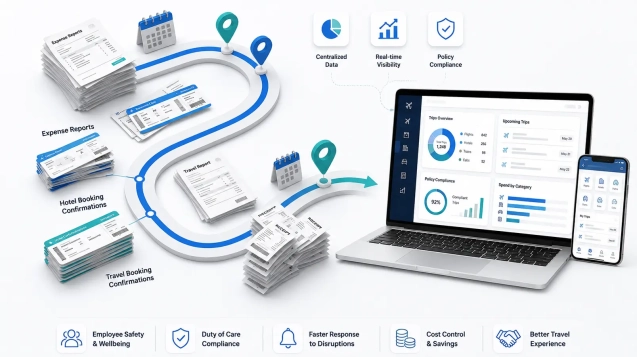
4. Centralised Travel Management Improves Visibility
One of the biggest challenges during business travel is knowing where employees are when disruptions occur.
Using a centralised corporate travel platform allows organisations to:
- View employee itineraries
- Track approved trips
- Monitor travel status
- Access booking information
- Communicate itinerary changes
Having all travel information in one place enables HR and travel managers to respond more quickly during emergencies.
5. Real-Time Communication Protects Travellers
Fast communication is one of the most valuable forms of security assistance.
Employees should always know:
- Who to contact during emergencies
- How to report travel disruptions
- Where to access travel updates
- How to request immediate assistance
Similarly, organisations should be able to notify travellers about:
- Flight disruptions
- Severe weather
- Local security incidents
- Changes to travel advisories
- Emergency instructions
Timely communication helps employees make informed decisions while reducing confusion during unexpected situations.
6. Provide Access to Medical and Emergency Assistance
Even routine business trips can involve unexpected medical situations. Employees should know what support is available before they travel and how to access it if needed.
A strong security assistance programme should provide:
- Emergency medical support information
- Travel insurance details
- Local hospital and clinic information
- Emergency contact numbers
- Assistance for lost passports or important documents
Quick access to reliable support reduces uncertainty and helps employees receive timely assistance.
7. Train Employees Before They Travel
Travel safety is a shared responsibility. While employers provide the right systems and support, employees also need practical guidance before every trip.
Pre-travel training can include:
- Destination-specific safety advice
- Cybersecurity best practices
- Safe transportation guidance
- Emergency reporting procedures
- Company travel policies
Even a short briefing can help employees recognise risks and respond appropriately in unfamiliar environments.
8. Use Technology to Strengthen Travel Security
Modern corporate travel platforms help organisations improve security through better visibility and faster communication.
Useful features include:
- Real-time travel itineraries
- Automated travel approvals
- Centralised traveller information
- Policy compliance alerts
- Travel dashboards
- Instant itinerary updates
Technology enables HR and travel managers to monitor travel activity without relying on manual spreadsheets or email chains.
9. Review Travel Incidents and Improve Processes
Every travel disruption offers an opportunity to strengthen future travel planning.
After an incident, review:
- What happened
- How quickly support was provided
- Whether communication was effective
- Gaps in the travel policy
- Opportunities for improvement
Regular reviews help organisations refine their security procedures and build a more resilient travel programme.
10. Build a Culture of Travel Safety
The most effective travel security programmes are supported across the organisation, not just by HR or travel teams.
Encourage employees to:
- Report safety concerns promptly
- Follow approved travel procedures
- Keep contact information updated
- Share itinerary changes when necessary
- Ask for assistance without hesitation
When travel safety becomes part of the company culture, employees are more likely to follow policies and seek support when required.
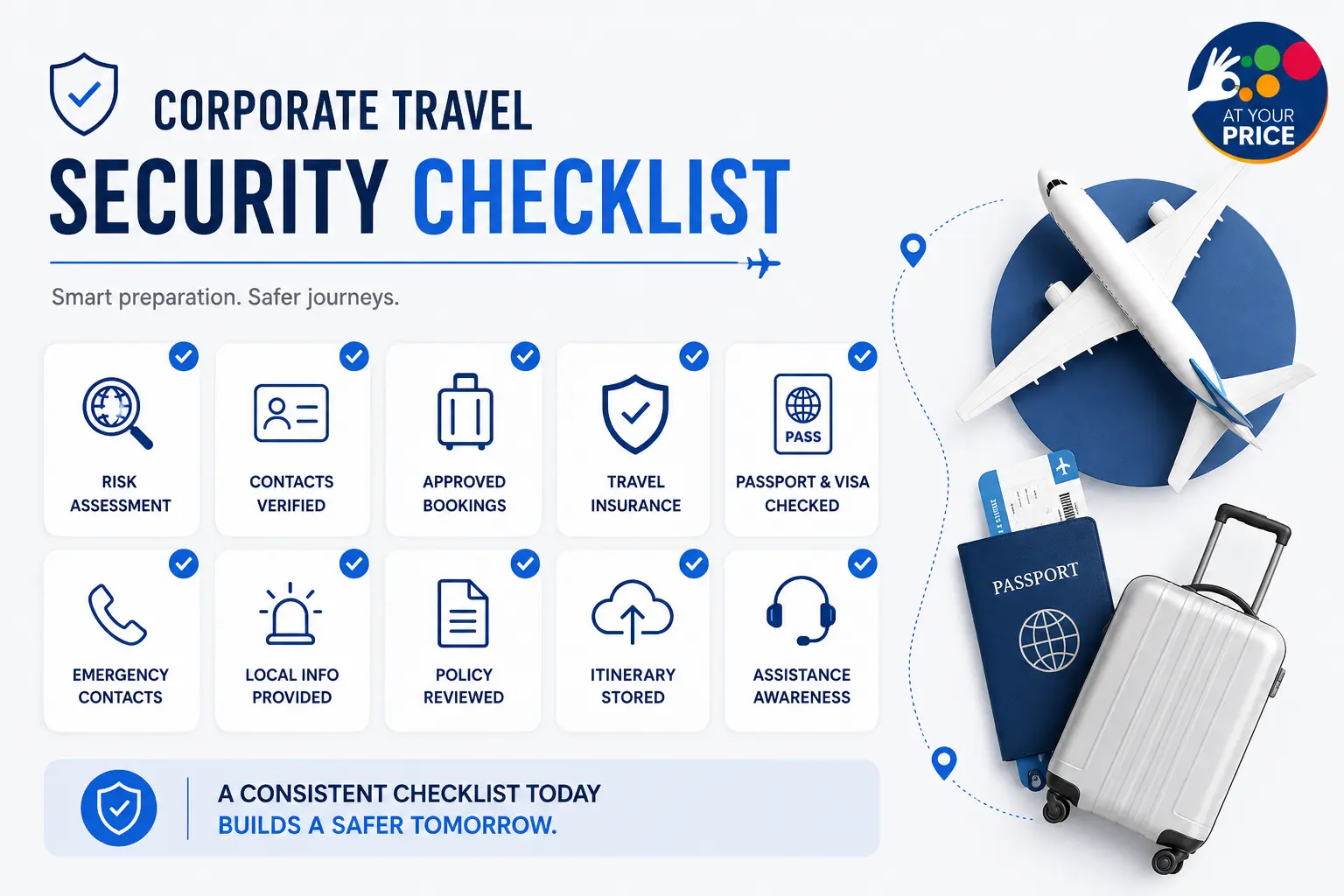
Corporate Travel Security Checklist
Before approving any business trip, confirm that the following steps have been completed:
✔ Destination risk assessment completed
✔ Employee contact details verified
✔ Flights and hotels booked through approved channels
✔ Travel insurance confirmed
✔ Passport and visa requirements checked
✔ Emergency contacts shared
✔ Local emergency information provided
✔ Company travel policy reviewed
✔ Itinerary stored in a central travel platform
✔ Employees know how to request assistance during the trip
Using a consistent checklist helps reduce avoidable risks while improving preparedness across the organisation.
Common Mistakes Businesses Should Avoid
Even well-managed travel programmes can overlook important aspects of security assistance.
Treating Security as an Afterthought
Security planning should begin before travel is approved, not after employees have already departed.
Depending on Manual Processes
Managing itineraries and traveller information through emails or spreadsheets limits visibility and slows response times during emergencies.
Providing Generic Travel Advice
Different destinations present different risks. Employees should receive guidance that is relevant to where they are travelling.
Failing to Update Travel Policies
Travel risks and regulations change regularly. Reviewing policies periodically ensures they remain practical and effective.
Frequently Asked Questions
What is security assistance in corporate travel?
Security assistance includes the processes, technology, and support services that help protect employees while travelling for work. This may include travel risk assessments, emergency communication, traveller tracking, and medical assistance.
Why is security assistance important for business travel?
It helps organisations protect employees, respond more effectively during emergencies, meet duty of care responsibilities, and minimise disruptions to business operations.
Who is responsible for business travel security?
Business travel security is a shared responsibility involving HR, travel managers, finance teams, business leaders, and employees. Each group plays a role in planning, communication, and policy compliance.
How can technology improve travel security?
Travel management platforms improve visibility through real-time itineraries, automated approvals, traveller tracking, policy compliance, and instant travel updates, enabling organisations to respond more quickly when situations change.
What should a corporate travel security policy include?
A comprehensive policy should cover:
- Approved booking channels
- Risk assessment procedures
- Emergency communication
- Travel insurance
- Incident reporting
- Traveller responsibilities
- Escalation procedures
Final Thoughts
Security assistance is no longer an optional part of corporate travel. As businesses expand into new markets and employees travel more frequently, organisations need reliable systems that protect travellers at every stage of the journey.
By combining clear travel policies, destination risk assessments, employee training, real-time communication, and modern travel technology, companies can strengthen their duty of care while improving the overall travel experience.
If you’re looking to build a safer and more efficient corporate travel programme, AtYourPrice helps organisations manage business travel through automated approvals, policy compliance, real-time travel visibility, GST-compliant invoicing, and dedicated traveller support.
Book a demo with AtYourPrice today to discover how one intelligent platform can help your organisation improve travel security, simplify business travel management, and keep employees supported wherever work takes them.