



Business travel has always involved risk. Delayed flights, lost baggage, political disruptions, medical emergencies, extreme weather, and last-minute itinerary changes are part of the reality companies deal with every day.
What has changed in recent years is how seriously organizations are expected to respond to those risks.
Today, employees expect their company to protect them while they travel for work. Governments are strengthening workplace safety expectations. HR teams are under pressure to improve employee wellbeing. And finance leaders want better visibility into where employees are, how they are travelling, and whether travel policies are actually being followed.
That is why duty of care has become one of the most important priorities in corporate travel management.
For businesses working with the best travel partner, duty of care is no longer limited to emergency support. It now includes proactive planning, traveller tracking, policy compliance, real-time communication, travel approvals, and fast support during disruptions.
Companies that ignore it risk more than operational issues. They risk employee trust, productivity, compliance, and brand reputation.
In this guide, we’ll explore what duty of care really means in modern business travel, why it matters more than ever, and how the right travel service providers in India help businesses manage it effectively.
What Is the Duty of Care in Corporate Travel?
Duty of care refers to a company’s responsibility to protect employees when they travel for work.
This includes:
- Ensuring employees travel safely
- Providing assistance during disruptions or emergencies
- Offering clear travel policies
- Monitoring travel risks
- Supporting employees before, during, and after trips
- Maintaining communication throughout the journey
In simple terms, if an employee is travelling for business purposes, the company is responsible for taking reasonable steps to ensure their safety and wellbeing.
This responsibility applies to:
- Domestic business travel
- International travel
- Client visits
- Conferences and events
- Factory inspections
- Long-term project travel
- Executive travel
Modern duty of care goes beyond booking flights and hotels. It requires companies to actively manage travel risk across the entire journey.
Why Duty of Care Has Become More Important
A few years ago, many organizations viewed corporate travel mainly as an operational function.
Now, it is closely tied to employee experience, compliance, and risk management.
Several factors have increased the importance of duty of care.
Increasing Travel Disruptions
Flight cancellations, weather issues, geopolitical tensions, visa delays, and airline operational problems are becoming more common.
Employees often need immediate support during these situations.
Without a reliable business trip partner, companies struggle to respond quickly.
Employee Expectations Have Changed
Employees today expect safer, smoother, and better-supported travel experiences.
They want:
- Faster approvals
- Clear travel policies
- 24/7 support
- Flexible booking options
- Real-time updates
- Safe accommodation choices
Organizations that fail to provide this support may face dissatisfaction and lower employee confidence.
Legal and Compliance Responsibilities
Companies can face legal and reputational consequences if they fail to take reasonable care of travelling employees.
This is especially important for:
- International travel
- High-risk destinations
- Late-night travel
- Women employee travel
- Extended work trips
Strong duty of care processes help businesses stay compliant and reduce liability.
Hybrid Work Has Increased Business Travel Complexity
Many companies now operate with distributed teams, regional offices, and hybrid work models.
This has increased travel frequency for:
- Team meetings
- Client visits
- Sales travel
- Internal collaboration
- Events and conferences
As travel volume grows, manual tracking becomes difficult.
That is why many organizations are moving toward centralized corporate travel platforms and working with the top corporate travel agencies in India for better visibility and support.
Key Components of a Strong Duty of Care Program
A modern duty of care strategy includes much more than emergency response.
Here are the most important elements companies should focus on.

Travel Policy Management
A clear travel policy creates consistency and reduces confusion.
It should define:
- Approved airlines and hotels
- Budget limits
- Booking procedures
- Emergency protocols
- Travel approval workflows
- Insurance requirements
A strong policy helps employees make safer decisions while maintaining company control over travel spend.
Real-Time Traveller Visibility
One of the biggest challenges companies face is not knowing where employees are during travel disruptions.
Modern travel management platforms provide real-time visibility into:
- Flight status
- Hotel bookings
- Travel locations
- Schedule changes
- Delays and cancellations
This allows companies to respond quickly during emergencies.
24/7 Travel Support
Travel problems rarely happen during office hours.
Employees may need urgent support for:
- Missed flights
- Hotel issues
- Medical emergencies
- Visa concerns
- Last-minute itinerary changes
The best travel partner provides round-the-clock assistance to ensure employees are never left unsupported.
Risk Monitoring and Alerts
Modern travel risk management includes proactive monitoring.
Companies should receive alerts about:
- Weather disruptions
- Political instability
- Airport strikes
- Health advisories
- Security threats
This allows travel teams to make informed decisions before problems escalate.
Centralized Booking Systems
When employees book travel independently, companies lose visibility and control.
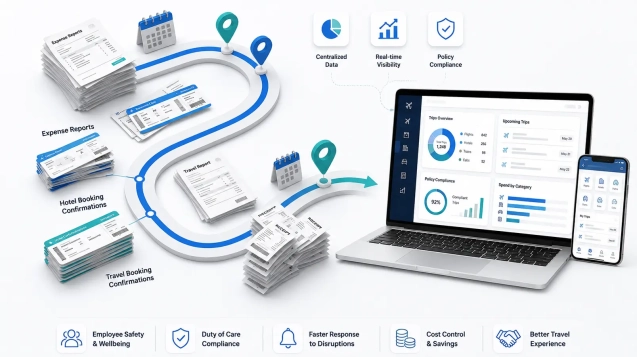
Centralized booking systems help organizations:
- Track all travel activity
- Enforce travel policy compliance
- Improve reporting
- Reduce unauthorized bookings
- Respond faster during emergencies
This is one reason many businesses prefer working with experienced travel service providers in India that offer integrated travel management solutions.
How Duty of Care Improves Employee Experience
Duty of care is not just about risk management.
It also improves employee satisfaction and productivity.
Employees travel more confidently when they know:
- Support is available anytime
- Their safety matters
- The company has a structured travel process
- Travel disruptions will be handled efficiently
This reduces stress and allows employees to focus on the purpose of the trip rather than travel logistics.
In competitive industries, employee experience has become a major business advantage.
Companies that provide smoother travel experiences often see stronger retention and better workforce morale.
The Role of Technology in Corporate Travel Duty of Care
Technology has transformed how companies manage business travel safety.
Today’s corporate travel platforms offer features like:
Automated Travel Approvals
Managers can approve trips faster while ensuring policy compliance.
Real-Time Notifications
Employees receive alerts for delays, gate changes, cancellations, and emergencies.
Travel Tracking Dashboards
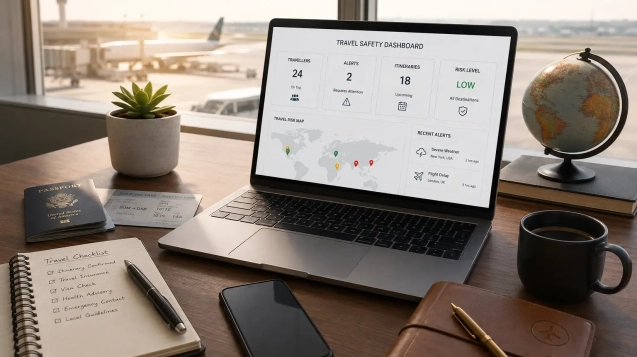
Travel managers can monitor all active trips in one place.
Integrated Reporting
Finance and HR teams gain better visibility into travel patterns and risks.
Emergency Communication Tools
Companies can quickly contact employees during unexpected situations.
Technology helps businesses move from reactive travel management to proactive travel support.
Why Choosing the Right Travel Partner Matters
Duty of care becomes difficult when companies manage travel manually or work with fragmented vendors.
The right corporate travel partner simplifies the entire process.
The best travel partner helps businesses with:
- Centralized travel booking
- Policy management
- Traveller tracking
- Emergency support
- Cost control
- Reporting and analytics
- GST-compliant invoicing
- Airline and hotel coordination
This reduces administrative burden while improving traveller safety and operational efficiency.
What Businesses Should Look for in Corporate Travel Service Providers
Not all travel providers offer the same level of support.
When evaluating travel service providers in India, businesses should consider:
24/7 Support Availability
Can employees get immediate help during emergencies?
Real-Time Reporting
Does the platform provide visibility into travel activity?
Policy Enforcement
Can the system automatically enforce travel policies?
Travel Risk Management
Are risk alerts and traveller tracking included?
Scalability
Can the solution support growing travel needs?
Integration Capabilities
Can it integrate with finance, HR, or expense systems?
Corporate Fare Access
Does the provider offer negotiated airline and hotel rates?
These capabilities are essential for companies looking to improve both travel efficiency and employee safety.
Common Duty of Care Mistakes Companies Make
Many organizations still struggle with outdated travel management processes.
Some common mistakes include:
- Allowing employees to book outside approved channels
- Using manual spreadsheets for travel tracking
- Having unclear travel policies
- Lacking emergency response processes
- Providing limited traveller support
- Ignoring travel risk monitoring
These gaps create operational and safety risks.
A structured travel management system helps eliminate these problems.

How SMEs Can Improve Duty of Care
Duty of care is not only for large enterprises.
Small and medium businesses also need structured travel processes.
SMEs can start by:
- Creating a formal travel policy
- Centralizing travel bookings
- Partnering with a reliable business trip partner
- Using travel approval workflows
- Offering emergency support access
- Tracking travel data and spend
Even simple improvements can significantly enhance employee safety and travel efficiency.
The Future of Duty of Care in Business Travel
Duty of care will continue evolving as business travel becomes more digital and data-driven.
Future trends include:
- AI-powered travel risk monitoring
- Predictive disruption alerts
- Smarter travel policy automation
- Integrated employee wellbeing tools
- Sustainability tracking
- Personalized traveller support
Companies that invest early in modern travel management systems will be better prepared for these changes.
Why Businesses Are Prioritizing Duty of Care in 2026
Organizations now understand that business travel is not just an operational expense.
It directly affects:
- Employee wellbeing
- Productivity
- Compliance
- Financial control
- Brand reputation
That is why more businesses are partnering with the top corporate travel agency in India to improve travel visibility, safety, and support.
Duty of care is no longer optional.
It is becoming a core part of responsible business operations.
Frequently Asked Questions
What does duty of care mean in corporate travel?
Duty of care refers to a company’s responsibility to protect employees while they travel for business. This includes safety measures, emergency support, travel policies, and risk management.
Why is duty of care important for business travel?
It helps companies protect employees, improve compliance, reduce travel risks, and provide better traveller experiences during business trips.
How can companies improve duty of care?
Companies can improve duty of care by using centralized travel management systems, creating clear travel policies, offering 24/7 support, and working with experienced corporate travel partners.
What role does technology play in the duty of care?
Technology provides real-time traveller tracking, automated approvals, disruption alerts, reporting, and emergency communication tools that improve travel safety and efficiency.
Why should businesses work with professional travel service providers in India?
Professional travel providers help companies manage bookings, enforce policies, reduce costs, improve visibility, and provide better support during travel disruptions.
What should companies look for in the best travel partner?
Businesses should look for:
- 24/7 support
- Real-time reporting
- Corporate fare access
- Policy management
- Risk monitoring
- Integrated travel technology
- Strong customer support
Final Thoughts
Business travel is becoming more complex, fast-moving, and risk-sensitive.
Companies can no longer rely on outdated travel processes or fragmented booking methods. Employees expect better support, leadership teams want more visibility, and organizations need stronger control over travel operations.
A strong duty of care strategy helps businesses protect employees while improving efficiency, compliance, and traveller experience.
AtYourPrice helps businesses simplify corporate travel with smarter booking solutions, centralized management, policy-driven workflows, real-time visibility, and dedicated support for travelling employees.
If your organization is looking for a smarter and safer way to manage business travel, now is the time to rethink your travel strategy.
Improve Duty of Care With Smarter Corporate Travel Management
Corporate travel today requires more than just bookings and approvals. Businesses need better traveller visibility, faster support during disruptions, stronger policy compliance, and a safer experience for employees on every trip.
AtYourPrice helps companies simplify business travel through centralized booking, real-time travel visibility, policy-driven workflows, and dedicated travel support. From improving employee safety to reducing operational friction, our platform helps businesses manage corporate travel more efficiently and confidently.
Book a demo with AtYourPrice and discover a smarter way to manage business travel and strengthen duty of care across your organization.