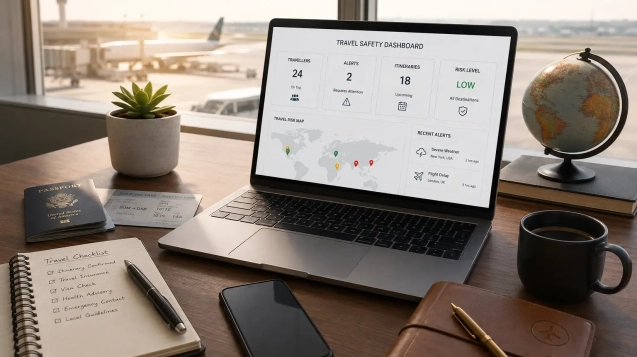




At 9:05 a.m., the travel manager’s inbox begins to fill up.
A sales executive needs a last-minute flight to meet a client. Finance wants an update on monthly travel spending. A manager is asking why a hotel booking exceeded the approved limit. Meanwhile, another employee has missed a connection and needs immediate help.
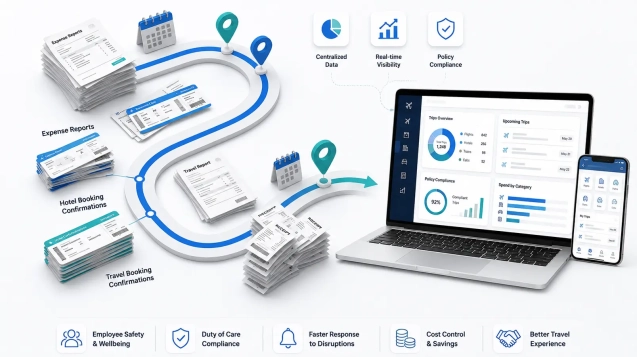
For many organisations, this is a typical morning. Corporate travel management involves coordinating bookings, approvals, expenses, and traveller support across multiple systems. When tools are disconnected, even routine tasks become time-consuming.
This is where platforms like AtYourPrice simplify the entire process. Instead of juggling emails, spreadsheets, and vendor portals, travel managers can oversee every part of the travel program from one place.
In this article, we walk through a typical day in the life of a travel manager using a unified travel management platform and show how technology reduces complexity while improving visibility and control.
9:00 AM: Reviewing Travel Requests with Full Visibility
The day usually begins with reviewing new travel requests.
In many companies, these requests arrive through email or messaging tools, forcing travel managers to gather details manually before making bookings. A centralised platform changes that process.
Within AtYourPrice, travel requests appear in a structured dashboard that includes:
- Traveller details
- Trip purpose
- Destination
- Budget range
- Policy guidelines
For example, if an employee plans to travel from Chennai to Mumbai, the system automatically highlights policy-compliant flight and hotel options.
Instead of searching across multiple websites, the travel manager can review and approve bookings quickly.
Result: Faster trip planning and fewer manual steps.
10:00 AM: Automating Approvals and Policy Compliance
Travel approvals often create delays. Managers may miss requests or approve bookings without reviewing company policy guidelines.
Automation solves this problem.
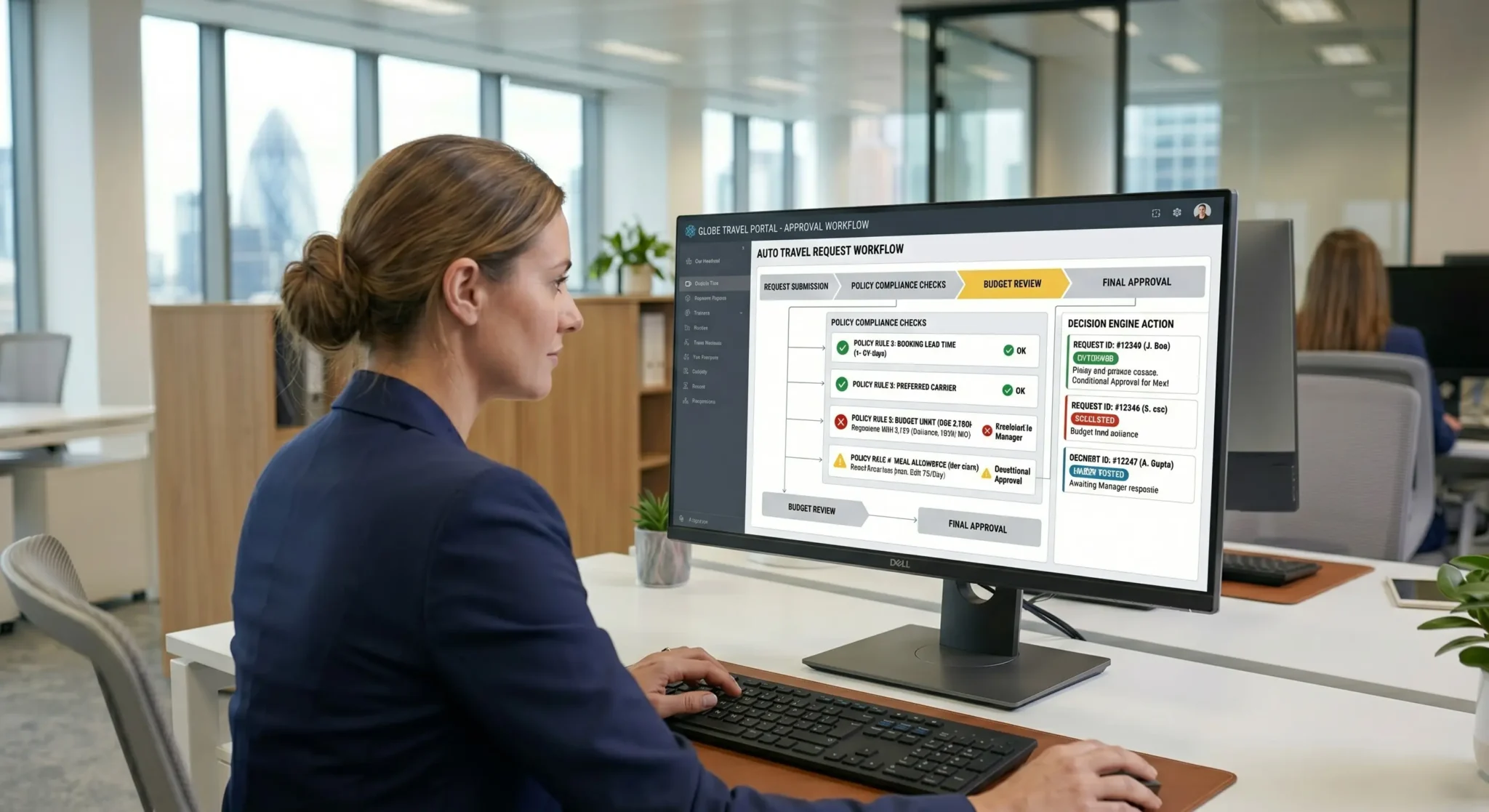
When travel policies are configured within the platform, the system automatically checks each request against the rules.
Examples include:
- Flight price limits
- Approved airline classes
- Preferred hotel categories
- Advance booking requirements
If a request falls within policy, the system can approve it automatically. If not, it is escalated to the appropriate manager.
Travel managers no longer need to manually review every request.
For companies with frequent travel between cities such as Bengaluru and Delhi, automated approvals significantly reduce administrative workload.
Result: Policy compliance improves without slowing down travel planning.

11:30 AM: Booking Flights and Hotels in Minutes
Once approvals are complete, the next step is booking travel.
Traditional booking methods require travel managers to compare multiple airline websites, hotel platforms, and vendor portals. This process is slow and often inconsistent.
A unified platform integrates travel inventory directly into the system.
The travel manager can instantly compare:
- Airline schedules
- Fare options
- Hotel availability
- Corporate negotiated rates
Flights operated by airlines such as IndiGo and Air India appear within the same interface, allowing quick selection of the best option.
Preferred hotel partners also appear with negotiated pricing.
Result: Booking a complete trip often takes only a few minutes.
1:00 PM: Monitoring Travel Spend in Real Time
After lunch, finance sends a request for a travel spend update.
In many organisations, generating this report requires gathering invoices, reviewing expense submissions, and compiling spreadsheets.
With a centralised travel platform, spend data is available instantly.
The dashboard provides a clear overview of:
- Total travel expenditure
- Department-level spending
- High-cost routes
- Policy compliance rates
For instance, the travel manager may notice increased travel between Delhi and Singapore and share this insight with procurement teams.
This visibility helps finance leaders understand travel budgets and plan future spending.
Result: Real-time reporting replaces manual data consolidation.
2:30 PM: Managing Travel Disruptions Quickly
Unexpected disruptions are part of business travel.
A delayed flight, a cancelled connection, or a sudden schedule change can affect multiple travellers in a single day.
Modern travel management platforms monitor global travel updates and notify travel managers when disruptions occur.
For example, if a traveller is affected by a delay at Dubai International Airport, the system can alert the travel manager immediately.
The travel manager can then:
- Identify the affected traveller
- Check alternative flights
- Update the itinerary
Result: Travellers receive faster support during disruptions.
4:00 PM: Simplifying Expense Management
Expense reconciliation is often the most tedious part of travel management.
Employees may forget to submit receipts or provide incomplete expense details. Finance teams then spend hours verifying information.
Integrated travel platforms simplify this process.
Since bookings are made within the system, expense data is captured automatically.
This includes:
- Flight charges
- Hotel invoices
- Service fees
Employees simply review and submit expenses for approval.
Finance teams can validate expenses without chasing travellers for documentation.
Result: Faster reimbursements and improved financial accuracy.
5:30 PM: Reviewing Travel Analytics for Strategic Planning
Before ending the day, the travel manager reviews travel analytics.
Data insights help answer important questions such as:
- Which routes generate the most travel spend?
- Are employees booking flights early enough?
- Which suppliers offer the best value?
For instance, frequent travel between Mumbai and Bengaluru may indicate an opportunity to negotiate better airline rates.
Analytics also reveal whether employees follow travel policies or require additional training.
Result: Travel managers can shift from operational tasks to strategic improvements.
Why a Unified Travel Platform Matters
Managing corporate travel across multiple tools creates unnecessary friction.
A unified platform brings every aspect of travel management together.
Key advantages include:
- Centralised travel booking
- Automated policy compliance
- Real-time travel visibility
- Integrated expense management
- Comprehensive reporting
When travel managers operate from a single system, they spend less time on administrative work and more time improving the travel program.
Benefits for Travellers, Finance Teams, and Leadership
A modern travel management platform benefits more than just travel managers.
For Travellers
Employees gain:
- Faster booking experiences
- Policy-compliant travel options
- Quick support during disruptions
For Finance Teams
Finance departments benefit from:
- Real-time spend visibility
- Accurate expense data
- Simplified reporting
For Leadership Teams
Executives gain insights into:
- Travel cost trends
- Policy compliance levels
- Travel program performance
These insights support better decision-making across the organisation.
Frequently Asked Questions
What does a travel manager do in a company?
A travel manager oversees corporate travel planning, including booking flights and hotels, managing travel policies, monitoring travel expenses, and supporting employees during trips.
Why do companies use travel management platforms?
Travel management platforms centralise booking, approvals, expense tracking, and reporting to simplify corporate travel operations.
How does automation help travel managers?
Automation reduces manual tasks such as approval reviews, expense tracking, and reporting, allowing travel managers to focus on strategic planning.
Can travel platforms reduce corporate travel costs?
Yes. Centralised booking and policy enforcement help organisations control travel spending and identify cost-saving opportunities.
How does a unified travel platform improve traveller experience?
Employees benefit from faster bookings, clear travel policies, and better support when disruptions occur.
What should companies look for in a travel management platform?
Key features include integrated booking tools, automated approvals, real-time reporting, expense management, and traveller support capabilities.
Final Thoughts
Corporate travel management involves constant coordination across travellers, finance teams, and leadership.
When processes rely on manual workflows and disconnected tools, travel managers spend too much time solving operational problems.
A unified platform changes that experience.
By centralising bookings, automating approvals, simplifying expense management, and providing real-time insights, travel management platforms allow travel managers to run efficient and transparent travel programs.
Instead of reacting to daily challenges, they can focus on improving traveller experience and controlling travel costs.
If your organisation wants to simplify corporate travel management and gain complete visibility into travel operations, consider moving to a unified travel platform like AtYourPrice.
Book a demo today and see how one platform can eliminate travel management headaches for your team.