



Business growth often brings a new challenge: managing employee travel across multiple cities. Sales teams visit clients, project managers oversee operations, executives attend meetings, and support teams travel for on-site assistance. While these trips are essential, they can quickly become one of the largest operational expenses if not managed properly.
For many organizations, the problem isn’t travel itself. The real challenge is maintaining visibility, compliance, and cost control when employees are constantly moving between locations.
Without a structured travel management strategy, expenses rise, policies are ignored, bookings become fragmented, and finance teams struggle to track spending accurately.
The good news is that businesses can effectively manage multi-city employee travel without sacrificing productivity or exceeding budgets. By combining clear policies, centralized booking systems, and data-driven decision-making, organizations can reduce travel costs while improving employee experience.
Why Multi-City Employee Travel Is Difficult to Manage
Managing travel for a single office location is relatively straightforward. However, as organizations expand across cities, travel complexity increases significantly.
Common challenges include:
- Inconsistent travel bookings across departments
- Last-minute flight and hotel reservations
- Lack of visibility into travel expenses
- Travel policy violations
- Duplicate or unnecessary trips
- Difficulty tracking employee movements
- Limited supplier negotiation power
When multiple teams book travel independently, companies lose control over spending and miss opportunities to optimize costs.
This is why many growing organizations partner with the best travel agency in India or adopt dedicated travel management platforms to centralize and streamline the process.
The Hidden Costs of Poor Travel Management
Most businesses focus only on visible expenses such as flights and hotels. However, unmanaged travel creates several hidden costs that often go unnoticed.
Last-Minute Bookings
Flights booked just a few days before departure can cost significantly more than those booked in advance.
For example:When dozens or hundreds of employees travel regularly, these differences add up quickly.
Travel Leakage
Travel leakage occurs when employees book outside approved channels.
Examples include:
- Booking directly through airline websites
- Using personal travel apps
- Selecting non-approved hotels
- Paying personally and seeking reimbursement later
This reduces visibility and prevents businesses from accessing negotiated corporate rates.
Administrative Burden
Finance and HR teams often spend countless hours reviewing travel claims, verifying receipts, and processing reimbursements.
A lack of automation increases both costs and operational inefficiencies.
Create a Centralized Travel Policy
One of the most effective ways to maintain budget control is by establishing a clear corporate travel policy.
The policy should define:
Booking Guidelines
Specify:
- Approved booking channels
- Preferred airlines
- Hotel categories
- Advance booking requirements
Approval Workflows
Define who can approve travel requests and under what circumstances.
This prevents unnecessary travel and ensures accountability.
Expense Limits
Set spending thresholds for:
- Flights
- Accommodation
- Meals
- Ground transportation
Clear limits reduce overspending while maintaining employee comfort.
Standardize Travel Booking Across Locations
A common mistake businesses make is allowing each office or department to manage travel independently.
Instead, organizations should centralize bookings through a single travel management solution or work with a top travel agency in India that can oversee travel requirements across all locations.
Benefits include:
- Consistent policy enforcement
- Better reporting
- Reduced travel leakage
- Stronger supplier negotiations
- Improved traveler support
Centralized booking creates transparency and gives finance teams greater control over spending.
Leverage Corporate Airline and Hotel Agreements
Companies with frequent multi-city travel have significant purchasing power.
Unfortunately, many organizations fail to use that leverage effectively.
Airline Partnerships
Corporate agreements can provide:
- Discounted fares
- Flexible cancellations
- Dedicated support
- Priority services
Hotel Negotiations
Preferred hotel programs often offer:
- Lower room rates
- Complimentary upgrades
- Flexible check-in and checkout
- Loyalty benefits
Partnering with a top travel company in India can help businesses secure better rates through established supplier relationships.

Encourage Advance Travel Planning
One of the simplest ways to reduce travel expenses is encouraging employees to plan ahead.
Why Advance Booking Matters
Airlines and hotels use dynamic pricing models.
As availability decreases, prices increase.
Booking travel 2–3 weeks in advance often reduces airfare and accommodation costs
Practical Strategies
Businesses can encourage early bookings by:
- Requiring advance approval
- Setting minimum booking windows
- Monitoring booking behavior
- Rewarding policy compliance
Small behavioral changes can produce significant annual savings.
Use Travel Data to Identify Spending Trends
You cannot control what you cannot measure.
Many organizations collect travel data but fail to analyze it effectively.
Tracking key travel metrics helps uncover opportunities for optimization.
Essential Metrics to Monitor
- Average trip cost
- Cost per employee
- Department-wise travel spending
- Advance booking rate
- Hotel cost per night
- Cancellation percentage
- Travel policy compliance rate
Regular reporting enables businesses to make informed decisions rather than relying on assumptions.
Optimize Travel Frequency Without Reducing Productivity
Not every meeting requires a flight.
Before approving travel requests, organizations should evaluate whether travel is truly necessary.
Ask questions such as:
- What business outcome is expected?
- Can the objective be achieved virtually?
- Is the travel revenue-generating?
- Does it strengthen critical client relationships?
A balanced approach allows businesses to reduce unnecessary trips while maintaining operational effectiveness.
Improve Employee Experience While Controlling Costs
Cost reduction should never come at the expense of employee satisfaction.
Travelers who face complicated booking processes or poor accommodations often experience lower productivity.
Focus on Convenience
Provide employees with:
- Easy booking options
- Mobile access
- 24/7 travel support
- Transparent travel policies
When employees understand the rules and have access to approved options, compliance naturally improves.
Balance Cost and Comfort
Choosing the cheapest option is not always the smartest decision.
A slightly more expensive flight with better timing may reduce fatigue and improve productivity.
Successful travel management balances financial control with employee well-being.
Why Businesses Are Choosing Travel Management Partners
As travel programs grow, managing everything internally becomes difficult.
Many organizations now rely on travel agencies to streamline operations and improve cost control.
A professional travel management partner can help with:
- Multi-city travel planning
- Corporate rate negotiations
- Traveler support
- Travel policy implementation
- Reporting and analytics
- Cost optimization strategies
The right partner acts as an extension of your business, helping you manage travel efficiently while reducing operational burdens.
Best Practices for Managing Multi-City Employee Travel
To summarize, organizations should focus on the following:
Establish Clear Policies
Create standardized travel rules and communicate them consistently.
Centralize Bookings
Use a single platform or travel management partner.
Monitor Spending
Track travel expenses regularly and benchmark performance.
Negotiate Supplier Rates
Leverage travel volume for better pricing.
Encourage Advance Planning
Reduce costs through early bookings.
Reduce Travel Leakage
Ensure employees use approved booking channels.
Automate Processes
Streamline approvals, expenses, and reporting.
These practices help organizations maintain visibility and budget control even as travel volumes increase.
Frequently Asked Questions
How can companies reduce multi-city travel costs?
Businesses can reduce costs through centralized booking, advance planning, negotiated supplier rates, automated travel management systems, and stronger policy compliance.
Why is centralized travel booking important?
Centralized booking improves visibility, enforces travel policies, reduces travel leakage, and helps organizations negotiate better corporate rates.
What is travel leakage?
Travel leakage occurs when employees book outside approved channels, causing businesses to lose visibility and miss negotiated discounts.
How does a travel management company help businesses?
A travel management company assists with booking, supplier negotiations, traveler support, reporting, compliance monitoring, and cost optimization.
What are the benefits of working with the best travel agency in India?
Businesses gain access to better rates, streamlined travel processes, expert support, and improved control over corporate travel spending.
How can travel technology improve budget control?
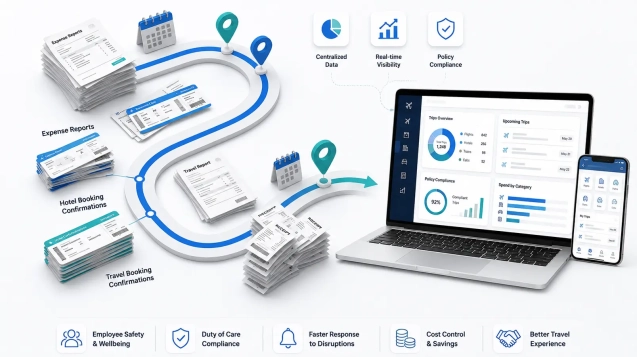
Travel technology provides real-time visibility, automates approvals, tracks expenses, enforces policies, and generates actionable analytics for better decision-making.
Take Control of Multi-City Travel Spending
Managing employee travel across multiple cities doesn’t have to result in budget overruns or operational headaches. With the right policies, technology, supplier relationships, and travel management strategy, businesses can improve visibility, strengthen compliance, and significantly reduce costs.
At AtYourPrice, we help organizations simplify corporate travel management, optimize travel spending, and deliver a seamless travel experience for employees across locations.
Ready to gain better control over your corporate travel budget? Book a demo with AtYourPrice today and discover a smarter way to manage multi-city employee travel.