



Your sales team just booked flights to three different client meetings next week. One used the company’s preferred booking tool, another found a deal on a consumer travel site, and the third called their personal travel agent. Meanwhile, your finance team is trying to reconcile expense reports from last month where half the receipts are missing and nobody can explain why someone flew first class to a regional conference.
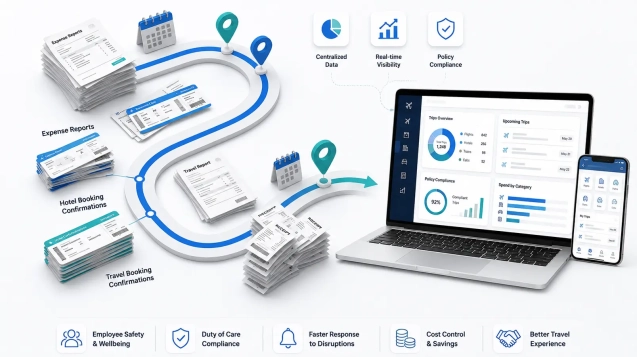
This is corporate travel without a unified platform. It’s scattered bookings, policy confusion, budget overruns, and finance teams spending hours piecing together travel spending from fragments of data.
The right travel platform transforms this chaos into organized, compliant, and cost-effective travel management. This guide breaks down what truly matters in corporate travel technology and how the right solution brings structure to an otherwise unmanageable process.
The Core Problem with Fragmented Travel Management
When Everyone Books Their Own Way
Without a centralized travel platform, employees book trips however they prefer. Some use consumer booking sites, others call travel agents, and a few might use an outdated corporate tool they mostly avoid.
This fragmentation creates visibility gaps that make travel management nearly impossible. You can’t track spending in real-time when bookings happen across a dozen different systems. You can’t enforce policy when you don’t see violations until expense reports arrive weeks later.
The cost implications extend beyond just higher ticket prices. You lose negotiating leverage with airlines and hotels because you can’t demonstrate booking volume. Your duty of care obligations become harder when you don’t know where employees are during emergencies.
The Data Problem Nobody Talks About
Fragmented booking creates data silos that prevent meaningful analysis. One system knows about flights, another tracks hotels, and expense reports capture ground transportation.
Without consolidated data, you can’t answer basic questions. Which routes does your team fly most frequently? Are employees actually using preferred vendors? What’s your true average cost per trip?
This lack of visibility makes optimization impossible. You can’t negotiate better rates without usage data. Strategic travel management requires data integration that fragmented systems simply can’t provide.
What Makes a Travel Platform Actually Useful
Comprehensive Booking in One Place
An effective travel platform consolidates flight, hotel, car rental, and ground transportation booking into a single interface. Employees shouldn’t need multiple sites or phone calls to arrange a complete trip.
The best platforms provide real-time inventory from multiple sources, ensuring competitive pricing without requiring employees to comparison shop. Integration with your company’s preferred suppliers and negotiated rates should be seamless.

Built-In Policy Enforcement
Policy compliance shouldn’t depend on employees remembering rules or finance teams catching violations after the fact. The right platform builds policy guardrails directly into booking.
When an employee searches for flights, the system should immediately flag options that violate policy and explain why. If a hotel exceeds your rate cap, employees see this before booking, not during expense reporting.
Intelligent policy enforcement recognizes that not all violations are equal. The platform should allow approved exceptions for legitimate business needs while flagging potential abuse.
Meaningful Reporting and Analytics
Data visibility separates basic booking tools from true travel management platforms. You need insights that drive better decisions.
Effective reporting shows spending trends across departments, routes, and vendors. You should identify your highest-cost travel routes, busiest periods, and opportunities for volume discounts. The platform should highlight policy compliance rates and common violation types.
Predictive analytics help with budget forecasting. When the system understands your historical patterns, it can project future spending and alert you to budget risks.
Mobile Accessibility That Actually Works
Business travelers need platform access from anywhere. A robust mobile app puts booking, itinerary management, and expense capture in employees’ pockets.
Mobile functionality should include the complete booking experience, not a stripped-down version. Travelers should modify reservations, access confirmation details, and submit expenses from their phones.
Key Features That Distinguish Great Platforms
Automated Expense Management
The connection between booking and expense reporting determines how much administrative work your finance team faces. Platforms that automatically capture booking details and receipts eliminate most manual data entry.
When employees book through the platform, trip details should flow directly into expense reports. Flights, hotels, and car rentals pre-populate expense forms with dates, amounts, and confirmation numbers.
Integration with corporate credit cards adds another layer of automation. Card transactions sync with bookings to match charges automatically.
Traveler Safety and Duty of Care
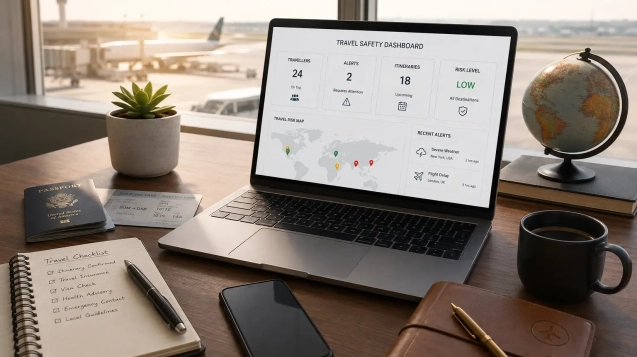
Corporate travel platforms play a crucial role in traveler safety. When employees book through a centralized system, you know where they are during emergencies or security incidents.
Real-time traveler tracking lets you contact affected employees immediately when situations develop. If a hurricane threatens a conference city, you can identify which employees have bookings there and help them modify plans.
Travel risk information should be integrated into booking. When employees search for trips to high-risk destinations, the platform can display security advisories.
Supplier Relationship Management
Your travel platform should help you leverage corporate buying power. Integration with preferred suppliers means negotiated rates appear automatically during booking.
The platform should track supplier performance beyond just pricing. Are your preferred airlines consistently on-time? Do your negotiated hotels meet traveler expectations?
Volume reporting demonstrates the value you bring to supplier relationships. When negotiating contracts, you need clear data showing room nights and flight segments your company generates.
Implementation Considerations
Integration With Existing Systems
A travel platform doesn’t exist in isolation. It needs to connect with your HR system for employee data, your accounting system for expense processing, and your expense management tools for reimbursement workflows.
API-based integrations enable real-time data exchange. When a new employee joins, their information should sync automatically. Single sign-on capabilities improve user adoption by eliminating additional passwords.
User Adoption Strategy
The best travel platform delivers no value if employees refuse to use it. Implementation success depends on making the platform easier than alternatives.
Training should be simple and ongoing. Short video tutorials, quick reference guides, and in-app help features support employees as they learn. Focus training on common tasks rather than exhaustive feature coverage.
Communicate the benefits to travelers, not just to finance. When employees understand how the platform makes their lives easier, adoption improves naturally.
Measuring Platform Success
Define success metrics before implementation. Common metrics include booking compliance rates, average cost per trip, time to process expense reports, and traveler satisfaction scores.
Compare pre and post-implementation data to quantify improvements. If policy compliance increases from 60% to 85%, that represents tangible value.
Common Platform Selection Mistakes
Prioritizing Features Over Usability
Platform comparisons often focus on feature checklists, leading organizations to select tools with impressive capabilities that nobody actually uses. A platform with 50 features where employees struggle with basic bookings delivers less value than a streamlined tool they use consistently.
Evaluate platforms based on how real employees will use them. Involve frequent travelers in selection decisions. Their feedback on usability often reveals issues that feature lists miss.

Underestimating Change Management
Technology alone doesn’t transform travel management. Successful platform implementation requires changing how employees think about booking and how finance teams manage the process.
Allocate resources for change management, not just technology deployment. This includes communication plans, training development, policy updates, and ongoing support.
Ignoring Total Cost of Ownership
Platform pricing extends beyond subscription fees. Implementation costs, integration work, ongoing support, and training all factor into total cost of ownership.
Consider the cost savings the platform enables through better policy compliance, negotiated rates, and reduced administrative work. A platform that costs more but delivers significant savings might be the better investment.
Frequently Asked Questions
How long does it take to implement a corporate travel platform?
Implementation timelines typically range from 4 to 12 weeks depending on complexity. Basic implementations with standard integrations can launch in a month, while customized deployments may take several months.
What’s the difference between a travel platform and a travel management company?
A travel platform provides technology for employees to book and manage travel themselves. A travel management company offers both technology and human travel agents. Many modern solutions combine both approaches.
How do travel platforms handle last-minute changes and cancellations?
Most platforms provide self-service tools for modifying or cancelling reservations within supplier policies. Changes happen in real-time through the same interface used for original booking.
Can small companies benefit from corporate travel platforms?
Yes. While enterprise features matter more for large organizations, small companies benefit from centralized booking, policy enforcement, and expense automation. Many platforms offer pricing tiers for companies with just 10-20 travelers.
What happens to existing supplier contracts when we implement a new platform?
Your negotiated rates and contracts remain valid. The platform simply becomes the technology interface for accessing those rates. Most platforms can integrate existing supplier agreements.
Bring Order to Your Corporate Travel Program
The right travel platform transforms corporate travel from a fragmented, uncontrollable expense into a managed, strategic program. When employees book through unified technology with built-in policy guidance, compliance improves, costs decrease, and your finance team reclaims hours spent reconciling scattered travel data.
Success requires more than just selecting a platform. You need a solution that fits your specific travel patterns, integrates with your existing systems, and delivers user experiences that drive adoption.
Ready to see how a modern travel platform can transform your corporate travel program? Schedule a demo to explore how our solution centralizes booking, enforces policy automatically, and provides the visibility you need to manage travel strategically.